
Face Shape Detector Online — Upload a Photo
Your photo is read once in memory and never stored. Only the written report is kept, and only when you unlock it.
A photo of a face is personal. Yours is read once in the request that analyses it and is never written to disk, never used for training and never shown to anyone. Only the written report is stored, and only if you unlock it.

One photo in, a written report out: the shape your proportions come closest to, the runner-up when it is a close call, how usable the photo was, and what hair, glasses, beard and makeup choices follow from the geometry. Free preview, no account
What the report reads off a photo
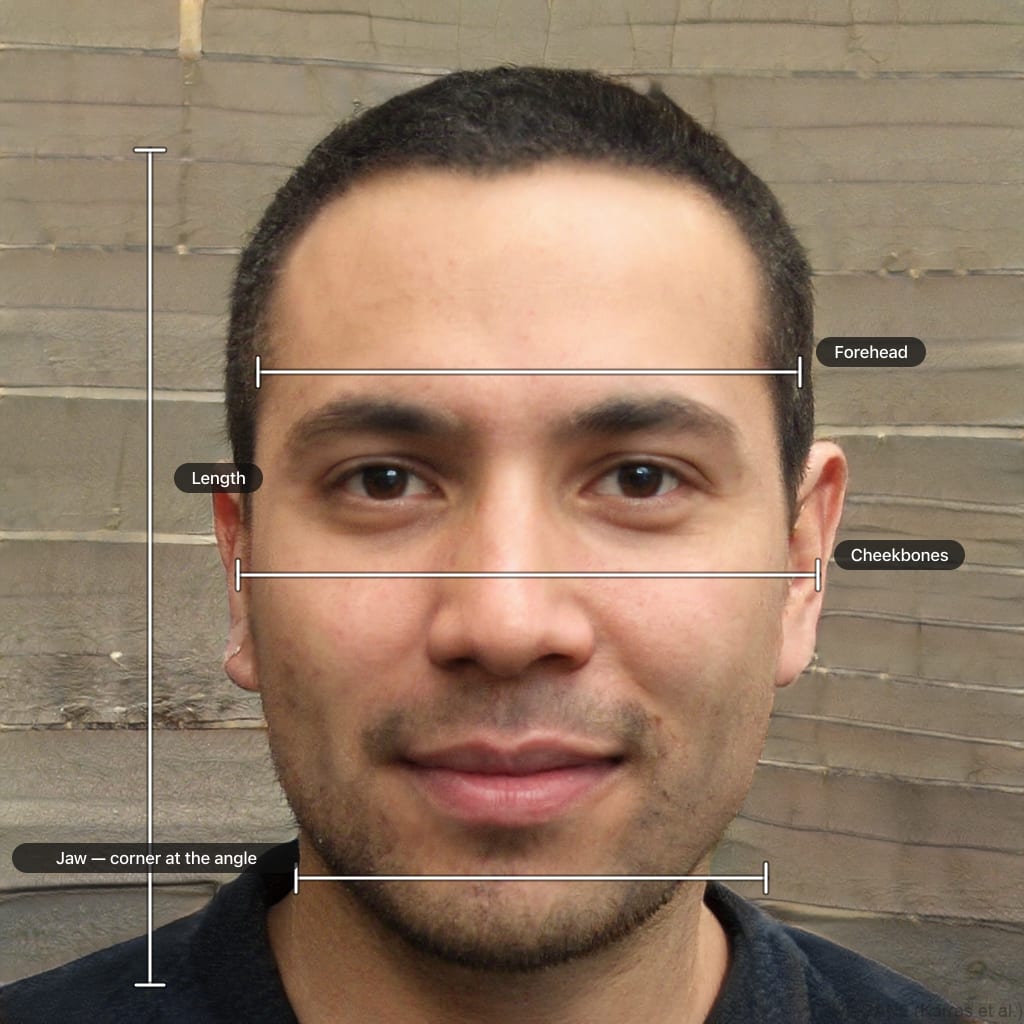
Drag the handle. On the left is the sample photo, on the right the proportions the report works from.

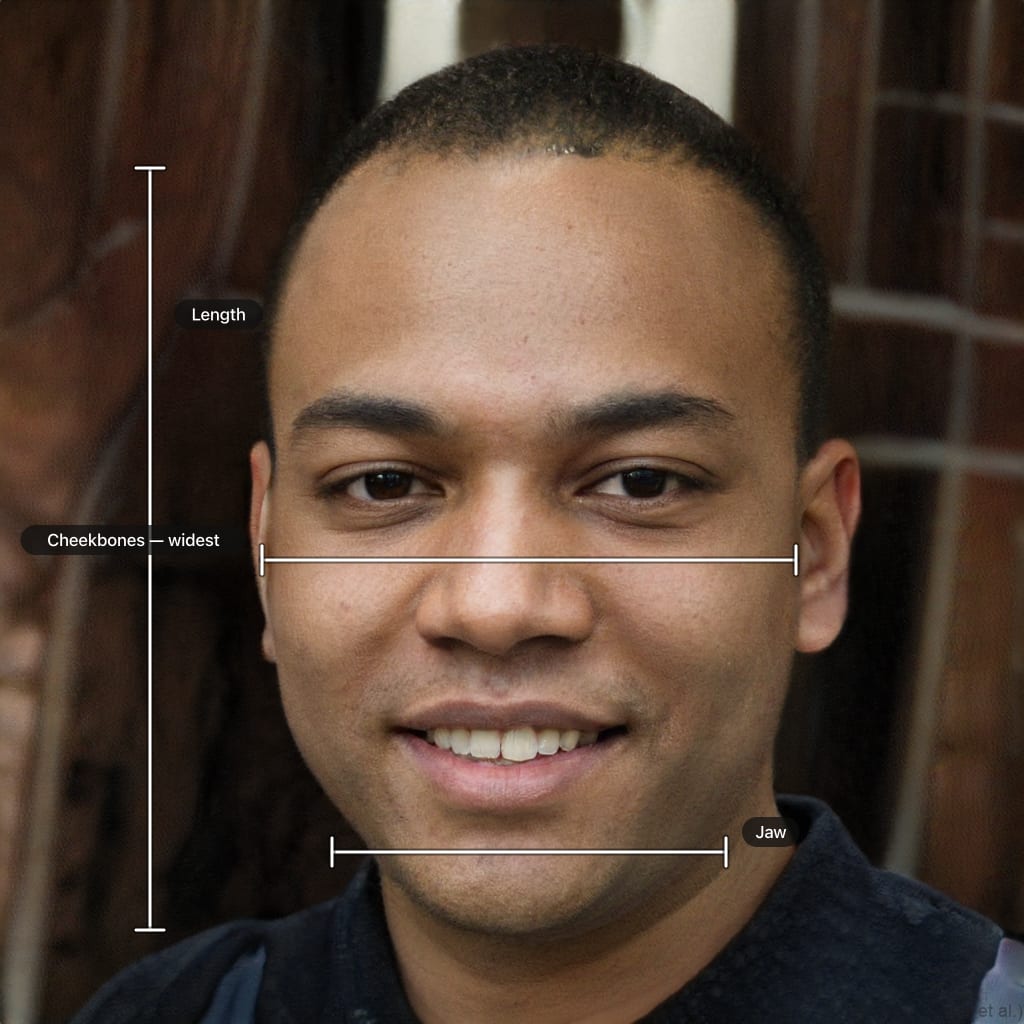 PhotoReport
A shape, a runner-up, and how sure the photo lets us be
Face shapes are boxes drawn around a continuum, so a single answer on its own is a guess with the doubt filed off. Every report names the closest category, the runner-up when it is close, a confidence figure tied to what the photograph allows, and the conditions — angle, light, hair over the jaw — that held it back.
Advice you can act on the same day
The full report turns the geometry into four sets of choices: hair length, volume and parting; frame shape and width for glasses; beard lines if you wear one; and where makeup placement changes the read. Options, not rules, and nothing that calls a face a problem to fix.
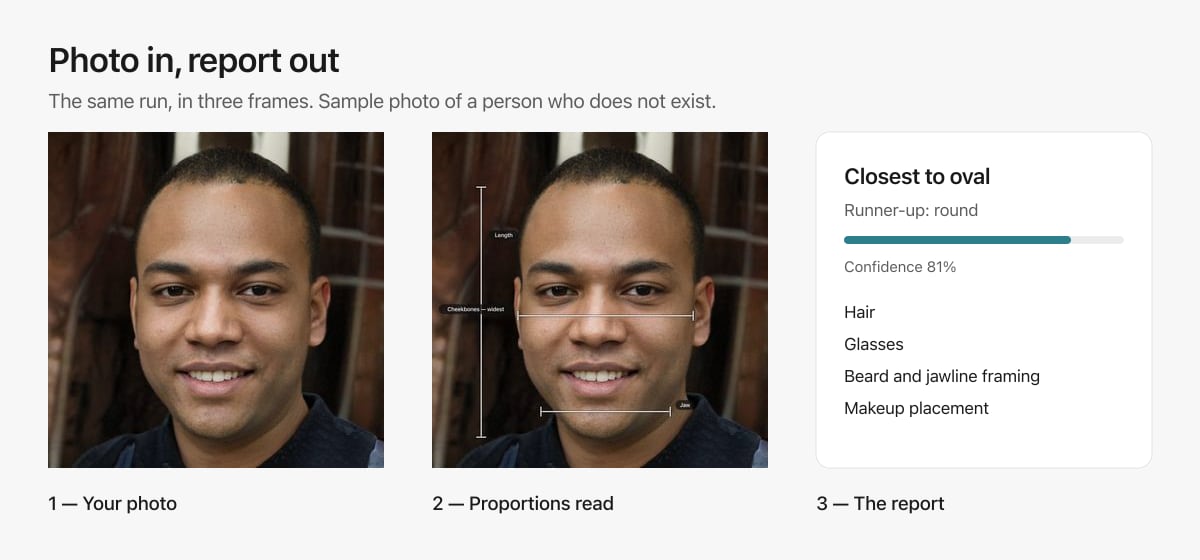
From your photo to the report
- Your photo
- Proportions read
- Closest to oval, with round as the runner-upClosest shape
Closest shape Oval Runner-up Round Read from Length vs width, widest line, jaw angle - Closest to oval, with round as the runner-upFull report
- Likely face shape
- What the proportions show
- Hair
- Glasses
- Beard and jawline framing
- Makeup placement
Photo in, report out
The upload card, the three stages of the run and the report it produces. Nothing is added by hand along the way; the free preview is the top of the same report the full version opens.
Try it on your own photo
The shape, the confidence and the photo notes are free. The four recommendation sections unlock with one analysis.
Your photo is read once in memory and never stored. Only the written report is kept, and only when you unlock it.
A photo of a face is personal. Yours is read once in the request that analyses it and is never written to disk, never used for training and never shown to anyone. Only the written report is stored, and only if you unlock it.
Questions
What happens to my photo?
It is held in memory for the single request that reads it, sent only to the vision provider that writes the report, and never written to disk, never used for training and never shown to anyone. Only the written report is stored, and only when you unlock it.
Which photo works best?
Front-facing, at eye level, in even light, with your whole head in frame and your hair tucked behind your jawline. No sunglasses, no heavy beauty filter, and hold the phone a little further away: at arm’s length a wide lens widens the nose and narrows the jaw.
Which face shapes can it tell apart?
Seven categories: oval, round, square, oblong (also called rectangle), heart, diamond and triangle. Most faces sit between two of them, which is why every report names a runner-up and says what would separate the two.
How accurate is it?
It is an estimate from visible proportions in one photograph, with a confidence figure and a list of what the photo could not settle. A turned head, hair over the jaw or a wide-angle selfie moves the answer, and the report says so instead of hiding it.
Does it rate how I look?
No. There is no attractiveness score, no symmetry or harmony rating and no ranking of any kind, and the tool does not guess your age, your identity or anything about your health. It describes geometry and suggests styling options.
Do I need an account?
No. The preview needs nothing but a photo. Unlocking the full report is a one-time purchase, and the link to your report plus any remaining analyses arrive in the receipt email.