
How it works
One photograph goes in, one written report comes out. This page is the whole of what happens in between, including the parts that limit the answer.
What the report reads
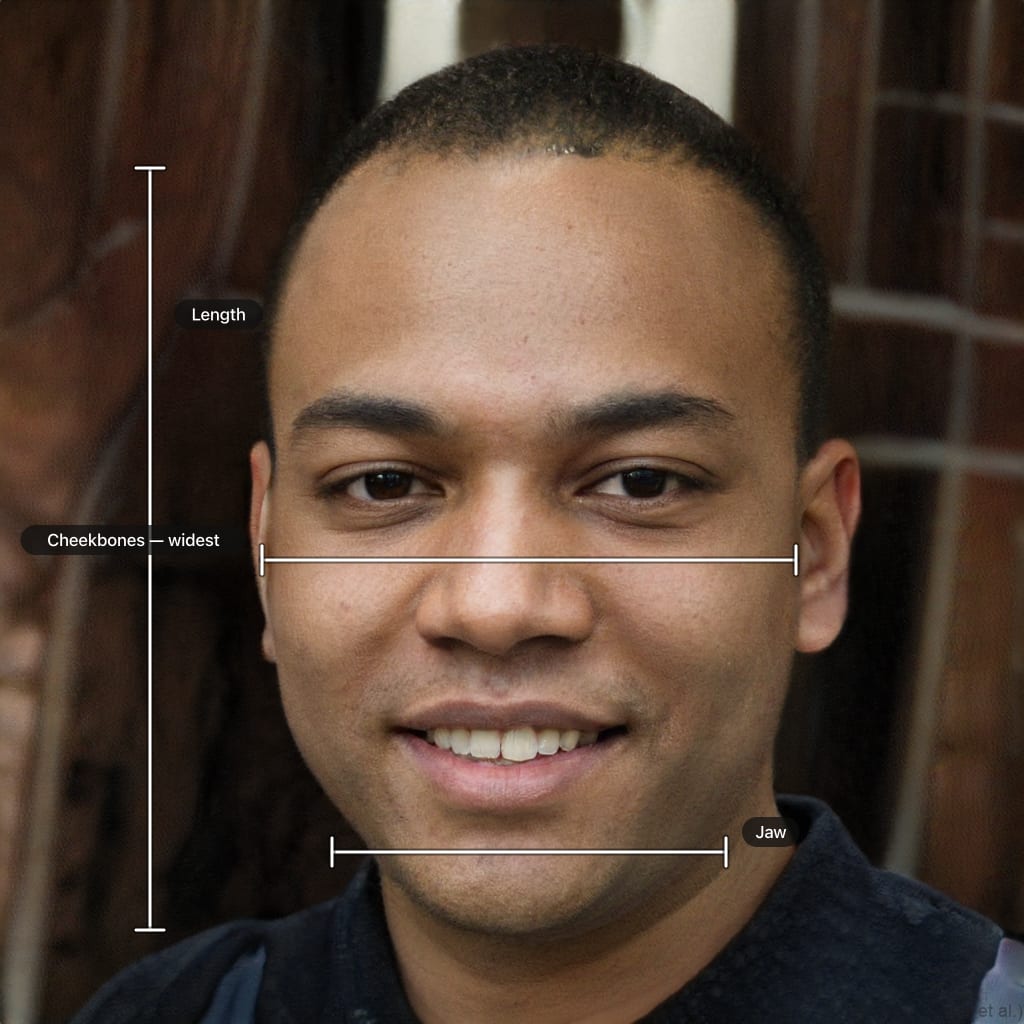
A face shape is decided by a handful of relationships, not by measurements in centimetres. The report works from five of them: the length of the face against its width, the width of the forehead, the width across the cheekbones, the width at the jaw, and whether the jaw turns a corner or curves. The chin and the hairline settle the close calls.
Those relationships are compared against seven categories — oval, round, square, oblong, heart, diamond and triangle — and the closest one is named, with the runner-up beside it. Theface shape guide sets out what each category means and which pairs are easiest to confuse.
Where the confidence figure comes from
Confidence describes how far the photograph lets the read go, not how good the face is. A front-facing photo in even light with the whole head in frame and the jawline visible supports a figure in the high seventies or eighties. One compromise — a slight turn, hair over the jaw, a hat — pulls it into the middle. A profile, an extreme angle, a heavy beauty filter or low light pulls it below halfway, and the report says which of those it hit.
The number never goes above 90 percent. Two neighbouring categories describe the same face at their boundary, and a near-certain answer would misrepresent that.
What a photograph cannot settle
No photo can tell bone width from soft tissue, and none can give a real measurement without a known scale in frame. A wide-angle lens at arm's length widens the nose and narrows the jaw; a camera held above eye level shortens the chin. Every report carries the list of what its own photo could not answer, and that list is free to read.
A photo the tool can actually read
Five things, in the order they matter.
| Face the camera | Both ears equally visible, chin level, eyes straight ahead |
|---|---|
| Camera at eye level | Above or below it changes the proportions the report reads |
| Even light in front | Side light and backlight hide the jaw line in shadow |
| Hair off the jaw | Tuck it behind both ears; the jaw is what separates the close categories |
| Arm and a half away | Closer than that and the lens distorts the face it is measuring |
No sunglasses, no beauty filter, and one person in the frame.
When the photo fights back
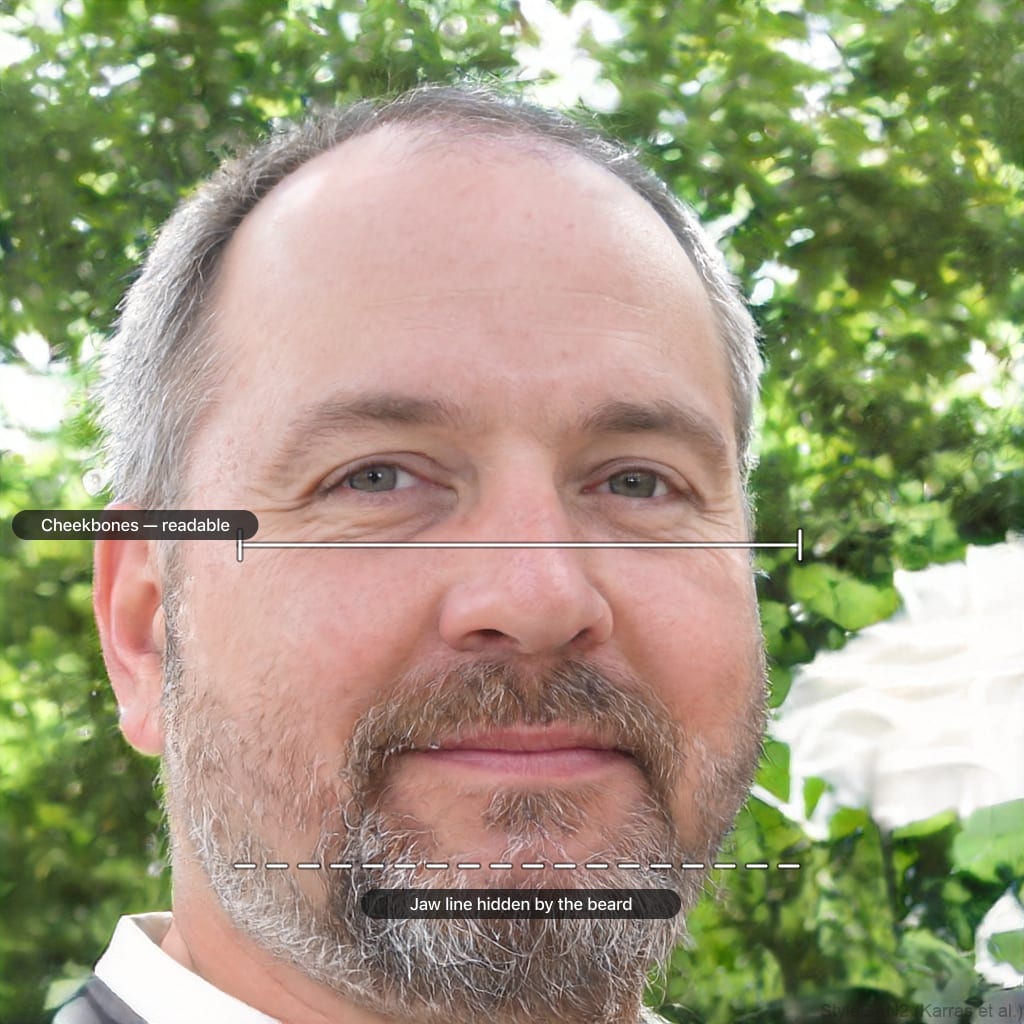
A photo that hides the jaw does not produce a confident guess — it produces a report that says which line is missing and what to change.
Photos with no face, several faces, or something that is not a face are refused rather than answered.
What happens to your photo
A photo of a face is personal. Yours is read once in the request that analyses it and is never written to disk, never used for training and never shown to anyone. Only the written report is stored, and only if you unlock it.
The written report is stored only when you unlock it, under a link that cannot be guessed, and the page carrying it is kept out of search engines. The full statement is on the privacy page.
What this tool is not
There is no attractiveness score, no symmetry or harmony rating, and no ranking of any kind. It does not estimate age, gender or ethnicity, does not identify anyone, and makes no medical, dental or surgical claim. It describes geometry and suggests styling options you can undo.
Questions
Does the tool recognise who I am?
No. It reads proportions in one photograph and writes a report about geometry. It does not match your face against anything, does not guess your age or identity, and does not keep the image.
Why does the confidence stay under 90 percent?
Because face shapes are boxes drawn around a continuum. Most faces sit between two categories, so a number above 90 percent would be a claim the underlying idea does not support.
What makes a photo unusable?
A turned head, a camera above or below eye level, hair or a beard across the jaw, heavy beauty filters, harsh side light, and anything that crops the top of the head or the chin. The report names whichever of these it ran into.
Upload a photo and read the free preview, or see what the full report costs.